Keynote Speaker I


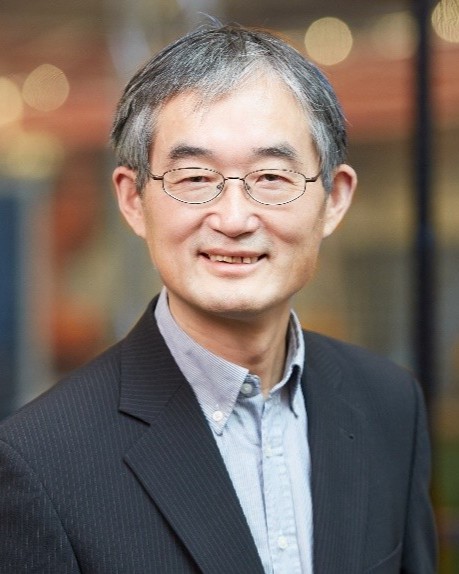
Prof. Maria Pia Fanti (IEEE Fellow)

Polytechnic University of Bari, Italy

Biography

Maria Pia Fanti (IEEE Fellow and Fellow of the Asia-Pacific AIA) received the Laurea degree in electronic engineering from the University of Pisa, Pisa, Italy, in 1983. She was a visiting researcher at the Rensselaer Polytechnic Institute of Troy, New York, in 1999. Since 1983, she has been with the Department of Electrical and Information Engineering of the Polytechnic of Bari, Italy, where she is currently a Full Professor of system and control engineering and Chair of the Laboratory of Automation and Control. Her research interests include modeling and control of complex systems, intelligent transportation systems, smart logistics; Petri nets; consensus protocols; fault detection. Prof. Fanti has published more than +310 papers and two textbooks on her research topics. She was senior editor of the IEEE Trans. on Automation Science and Engineering and member at large of the Board of Governors of the IEEE Systems, Man, and Cybernetics Society. Currently, she is Associate Editor of the IEEE Trans. on Systems, Man, and Cybernetics: Systems, member of the AdCom of the IEEE Robotics and Automaton Society, and chair of the Technical Committee on Automation in Logistics of the IEEE Robotics and Automation Society. Prof. Fanti was General Chair of the 2011 IEEE Conference on Automation Science and Engineering, the 2017 IEEE International Conference on Service Operations and Logistics, and Informatics and the 2019 Systems, Man, and Cybernetics Conference.

Abstract

Classical approaches to system identification are based on parametric estimation paradigms from mathematical statistics. In this setting, a key point is the selection of the most adequate model structure which is typically performed via complexity measures such as the Akaike's criterion. Starting from the linear scenario, then moving to the nonlinear one, this talk will describe how the model selection problem can be successfully faced by a different approach based on regularization theory. In particular, I will discuss the use of Bayesian kernel-based methods where the unknown system is seen as a Gaussian process whose covariance (kernel) includes information on system stability and/or fading memory. Here, tuning of model complexity gets a whole new dimension and richness in the choice of (continuous) regularization parameters compared to the choice of (discrete) model orders.

Keynote Speaker II


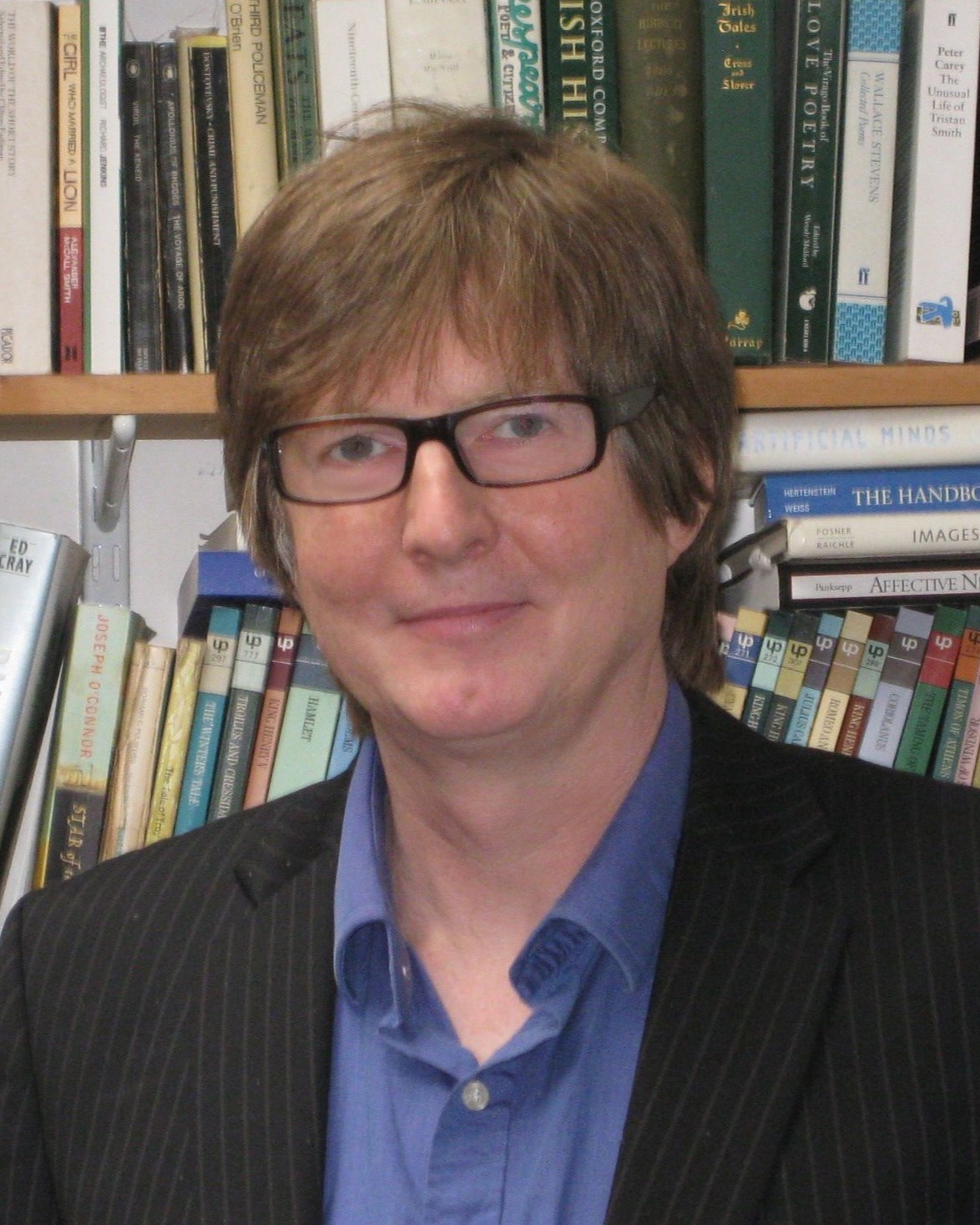
Prof. Shaoping Bai (ASME Fellow)

Aalborg University, Denmark

Biography

Shaoping Bai is a full professor at the Department of Materials and Production, Aalborg University (AAU), Denmark. His research interests include wearable sensors, medical and assistive robots, and exoskeletons. Prof. Bai leads several national and international research projects in exoskeletons, including EU AXO-SUIT and IFD Grand Solutions project EXO-AIDER, and Danish Independent Research Council project VIEXO, among others. He is a recipient of several best paper awards in conferences including IEEE CIS-RAM 2017, IFToMM MEDER 2018, MESROB 2023, IFToMM ISRM 2026, in addition to   WearRAcon2018 Grand Prize of Innovation Challenges and the Best Paper Award 2024 from Biomimetic Intelligence and Robotics journal.  Prof. Bai is an associate editor of Robotica,  ASME Letters in Translations Robotics, and Wearable Technologies. He is the founder of BioX ApS and an elected member of IFToMM Executive Council.


Abstract

To be added...

Invited Speaker I


Assoc. Prof. Masoumeh Iran Mansouri

University of Birmingham, UK

Biography

Masoumeh Iran Mansouri is an Associate Professor in the School of Computer Science at the University of Birmingham, UK. Her research spans several complementary areas, including robot planning, cultural robotics, and the social study of AI/robotics. She was previously a researcher at the Centre for Applied Autonomous Sensor Systems at Örebro University, Sweden, and has held visiting positions at the Oxford Robotics Institute and in Sven Koenig's lab at the University of Southern California. Her core technical work addresses automated planning for (semi-)autonomous robotic systems, both single- and multi-robot, that share space with humans. This includes hybrid methods combining task and motion planning, scheduling, and spatio-temporal reasoning for real-world settings from mining to museum service robotics as well as planning under uncertainty and failure recovery in assembly tasks. She has also worked extensively on settings that require coordination and collaboration among robots, developing methods for multi-robot trajectory optimization and formation planning, with applications such as object transport and fleet management in warehouses. Her research also extends to cultural robotics, a field dedicated to studying the effects of integrating cultural models into robots. She approaches cultural robotics from a critical perspective, calling for a deeper understanding of the new forms of culture that emerge in human–robot interactions, the impacts of these cultures on participants, the contexts in which such interactions occur, and their influence on broader societies.

Abstract

Classical approaches to system identification are based on parametric estimation paradigms from mathematical statistics. In this setting, a key point is the selection of the most adequate model structure which is typically performed via complexity measures such as the Akaike's criterion. Starting from the linear scenario, then moving to the nonlinear one, this talk will describe how the model selection problem can be successfully faced by a different approach based on regularization theory. In particular, I will discuss the use of Bayesian kernel-based methods where the unknown system is seen as a Gaussian process whose covariance (kernel) includes information on system stability and/or fading memory. Here, tuning of model complexity gets a whole new dimension and richness in the choice of (continuous) regularization parameters compared to the choice of (discrete) model orders.